Unlock the full potential
of AI compute
DOS (Decart Optimization Stack) pushes AI hardware further.
Maximizing throughput, reducing latency, and improving compute efficiency across inference and training workloads.
8xTPS
TPS in TPU vs. baseline
30xFPS
FPS in TRN vs. baseline
1500TPS
TPS LLM workloads (gpt-oss 120b)
100FPS
FPS in live video generation
Demand for compute
is outpacing supply
Chip production can’t keep up with the demand AI is creating, and securing more compute isn’t always an option. DOS gets more out of the compute you already have access to, cutting idle time and raising utilization across GPUs, TPUs and Trainium, so you unlock more capacity without waiting on new hardware.
 AI compute demand
 Chip supply
 The compute gap
Most AI chips never reach their full potential.
DOS changes that
The Decart Optimization Stack (DOS) is a vertically integrated inference and training platform for LLM, agentic, video and world model workloads. It sits between the model and the chip, tuning the kernels, compilers and runtime to the hardware so every core stays busy. The result is the same model running faster and at higher utilization on any accelerator, integrated into your existing infrastructure.


What DOS improves

Latency
Higher utilization cuts time to first token and time per frame, enabling real-time experiences and products that weren’t possible before.

Throughput
By keeping every core busy, each chip serves more users and requests, so you scale without scaling your hardware.

Cost
When compute you pay for is fully used, bringing real-time video generation down to $0.01 per second and turning AI from an expense you limit into a product you can grow.
Built to optimize across architectures
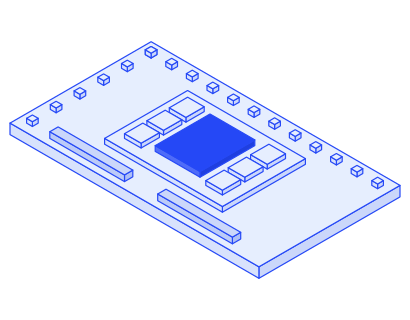
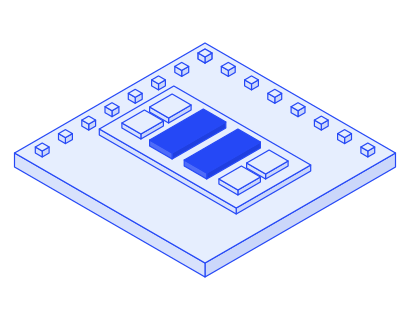
DOS is hardware-agnostic from the ground up, tuning each model to every chip it runs on so it can move between accelerators. Run where compute is cheapest, most available and best suited for your workload.
 Nvidia GPU


- Market average
- With DOS
No trade-off between
speed and scale
Every AI deployment balances two things: how many users a chip can serve, and how fast each one gets a response. DOS moves the entire curve. At every level of responsiveness, the same chip delivers more tokens, and it reaches speeds the market average can’t, with up to 3× faster responses per user than leading systems.
Who DOS is built for
Everyone running AI faces the same limit: compute. DOS helps you get more from it.

Model developers
Train and serve frontier models faster, at lower compute cost.

Chip manufacturers
Bring out your silicon’s full performance with optimized workloads and benchmarks.

Inference platforms
Serve more users per chip, with lower latency and higher margins.

Enterprises
Get more from every token, with faster responses and lower costs.
DOS makes live AI possible
Live AI has no room for delay: every frame must be generated before the next one is due, continuously, for as long as the user is there. DOS is what makes that possible in Decart’s own models. By keeping every core busy and every operation tuned to the chip, it brings generation fast enough to happen in real time, letting Lucy edit live video in under 40 ms at up to 100 FPS, and Oasis generate interactive worlds that respond to every action in under 200 ms.